
San Diego County currently reports some of the highest rates of mesothelioma in the United States, a sobering fact that changes how homeowners must approach outdated interior finishes. When you begin researching the textured ceiling removal San Diego cost, it’s vital to look beyond simple labor rates. A successful project integrates environmental safety, strict regulatory compliance, and the technical precision required to deliver a modern, smooth surface.
You likely want to modernize your living space but feel overwhelmed by the potential for a massive, dusty mess or hidden asbestos risks. It’s common to feel uncertain about how a simple cosmetic change can evolve into a complex technical challenge. This guide provides the clarity you need to navigate these variables, ensuring your renovation results in a flawless Level 5 finish. We’ll examine the specific factors driving project expenses in 2026, from San Diego’s unique air quality rules to the specialized techniques that transform dated textures into high-end architectural assets.
Key Takeaways
- Identify the functional differences between popcorn and knockdown textures and why these acoustic finishes were historically standard in Southern California properties.
- Analyze the specific variables impacting the textured ceiling removal San Diego cost, focusing on total square footage and architectural complexities like vaulted ceilings.
- Assess the technical risks of DIY removal and how industrial-grade HEPA equipment protects your home’s structural integrity and indoor air quality.
- Understand the multi-stage skim coating process required to transition from a dated textured surface to a flawless, modern Level 5 finish.
- Learn how to verify the specialized expertise and licensing of contractors to ensure a safe, compliant, and high-quality ceiling renovation.
Understanding Textured Ceilings in San Diego Properties
San Diego’s residential landscape is a diverse mix of mid-century charm and modern architectural precision. If your home was constructed between 1950 and 1990, your ceilings likely feature a textured finish. These surfaces, often referred to as a Popcorn ceiling or knockdown texture, were once the industry standard for Southern California developers. While they served a functional purpose during the initial build, they now represent a primary hurdle for homeowners seeking a contemporary aesthetic. Most properties in the region feature one of two primary styles:
- Popcorn Texture: A highly stippled, “cottage cheese” appearance designed primarily for sound attenuation and rapid application.
- Knockdown Texture: A flatter, mottled finish created by spraying joint compound and then flattening the peaks with a trowel to create a stucco-like effect.
Identifying the specific era of your property is the first step in estimating the textured ceiling removal San Diego cost; older applications carry different technical requirements and safety risks that must be addressed before any work begins.
The Role of Acoustic Ceilings in Older Construction
In previous decades, textured finishes were prized for their operational efficiency. Applying a heavy texture allowed builders to bypass the meticulous labor required for a smooth, Level 5 drywall finish. The bumpy surface effectively masked minor structural settling and framing imperfections that would be glaringly obvious on a flat plane. Beyond aesthetics, these “acoustic” ceilings provided modest sound dampening. This was a significant selling point in multi-family units or high-traffic residential areas across San Diego. However, these benefits diminish as the material ages. Older textures are prone to yellowing and peeling. They can also trap moisture, which eventually leads to more complex issues requiring professional drywall repair or mold remediation services.
Why San Diego Homeowners are Modernizing
The transition toward “museum-style” flat ceilings is a strategic investment in property value. In San Diego’s competitive real estate market, a smooth finish suggests a higher level of professional maintenance and modern refinement. Removing these textures also addresses critical health and design concerns. Popcorn surfaces act as magnets for dust, pet dander, and allergens. This accumulation can degrade indoor air quality over years. Additionally, heavy textures create harsh shadows that interfere with modern recessed lighting systems, making rooms feel smaller and dimmer. By transitioning to a smooth surface, you allow light to distribute evenly across the room. This creates a cleaner, more expansive atmosphere that aligns with modern residential standards. Understanding the textured ceiling removal San Diego cost involves weighing these long-term environmental and aesthetic benefits against the initial investment in professional remediation.
Key Factors Influencing Removal Costs in San Diego
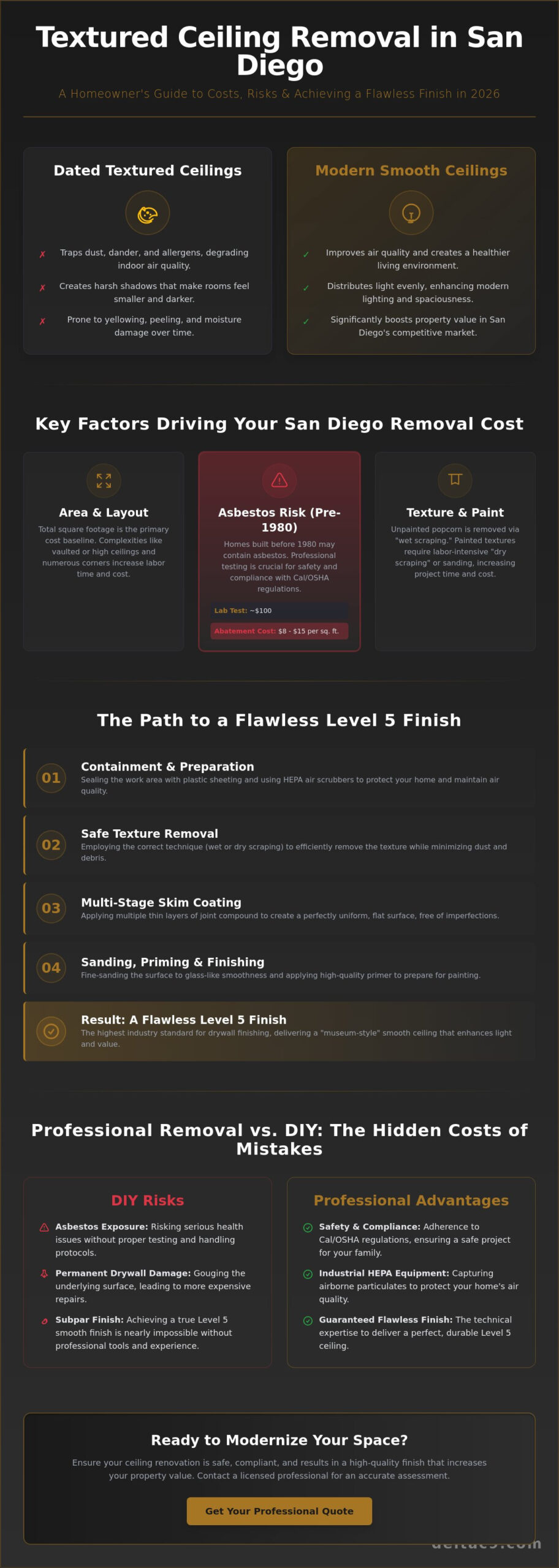
Calculating the textured ceiling removal San Diego cost requires an analysis of square footage alongside specific environmental and structural variables. While the total area of the ceiling provides the baseline for any estimate, the method of removal and local regulatory requirements often dictate the final project scope. Professional contractors must evaluate whether a “wet” or “dry” scraping technique is appropriate. Wet removal is standard for unpainted popcorn textures, as it minimizes airborne particulate matter. However, if the texture has been painted over, a more labor-intensive dry scraping or mechanical sanding process is required, which increases the time investment and equipment needs.
Asbestos Testing and Remediation Requirements
For any San Diego property built before 1980, the presence of asbestos is a primary safety and cost consideration. Under the San Diego County Air Pollution Control District Rule 1206, single-family homes are often exempt from mandatory testing for small-scale remodeling. Despite this exemption, Cal/OSHA maintains strict regulations for the handling of asbestos hazards to protect both occupants and workers. A professional lab test in the San Diego area typically costs approximately $100. If tests return positive, the project transitions from a standard cosmetic update to a specialized abatement. Abatement costs are significantly higher, often ranging from $8 to $15 per square foot, due to the requirement for sealed containment zones and specialized disposal protocols at authorized hazardous waste facilities.
Structural Variables: Height and Room Layout
The architecture of your home significantly impacts labor efficiency. Standard eight-foot or nine-foot ceilings allow for rapid progress using basic ladders and extension tools. In contrast, the vaulted ceilings common in coastal San Diego estates or modern canyon-side homes require scaffolding systems and additional safety harnesses. These structural requirements increase the hourly labor rate, which typically falls between $25 and $50 for skilled drywall professionals. Room layout also plays a role; working in an empty, “broom-clean” property is more efficient than navigating an occupied home with custom cabinetry, built-in shelving, or delicate flooring that requires extensive protective masking.
Local waste disposal fees further influence the budget. San Diego has specific mandates for construction and demolition debris, requiring contractors to document that materials are handled according to California’s environmental standards. To ensure your project remains compliant while achieving a superior aesthetic result, consider consulting with a specialist in expert drywall installation to evaluate your specific ceiling conditions. This proactive assessment helps prevent unexpected delays and ensures a seamless transition to the finishing phase.
Professional Removal vs. DIY: The Hidden Costs of Mistakes
While the initial textured ceiling removal San Diego cost might tempt some homeowners toward a DIY approach, the technical risks often outweigh the perceived savings. Professional execution involves more than just scraping; it requires a systematic approach to containment and structural preservation that protects your property investment. DIY attempts frequently lack industrial-grade scrapers and HEPA-filtered vacuums. Without these specialized tools, the risk of gouging the underlying drywall paper is extremely high. Damaging the paper substrate necessitates extensive drywall repair, which adds unplanned labor and material expenses to the project budget.
Speed is another critical factor. A professional crew can often complete a standard residential project in a fraction of the time it takes an inexperienced individual. This efficiency isn’t just about labor hours; it’s about minimizing the duration of home displacement. When you factor in the cost of tool rentals, high-quality protective gear, and the potential for structural mistakes, the professional route often proves more cost-effective over the total project timeline.
The Mess Factor: Containment and Cleanup
Proper containment is the most overlooked phase of the removal process. Professionals use heavy-duty plastic sheeting and specialized tape to seal off the work zone entirely, including all HVAC vents. This prevents fine particulates from entering your ventilation system, which could otherwise circulate dust through the entire home for months. Managing the “slurry” created by wet-scraping methods is equally technical. If this heavy, moisture-laden material isn’t contained and disposed of correctly, it can damage hardwood floors or seep into baseboards. We implement post-removal air filtration protocols to ensure the living space is safe and debris-free before the finishing phase begins.
Long-term Results and Surface Integrity
Once the texture is removed, the true condition of the ceiling is revealed. We often find hidden water damage, rusted corner beads, or structural settling that the original texture was designed to mask. A professional assessment ensures these issues are corrected before any new finish is applied. This stage is where high-quality ceiling and drywall solutions become essential. Ensuring the substrate is structurally sound and perfectly level is the only way to achieve a high-end architectural finish. By addressing these hidden variables during the removal phase, we guarantee a stable foundation for the skim coating process that follows.
Achieving the Perfect Smooth Finish: Skim Coating and Level 5
Removing the texture is only the first phase of a successful renovation. It’s a common misconception that the ceiling is ready for paint immediately after the scraping is finished. In reality, the textured ceiling removal San Diego cost is heavily influenced by the meticulous labor required to refinish the underlying surface. Once the popcorn or knockdown material is gone, the raw drywall substrate often reveals joints, fasteners, and minor gouges that were previously hidden. Skim coating is the technical process of applying thin layers of joint compound to create a perfectly flat, uniform plane that is ready for high-end architectural paint.
The industry categorizes drywall finishing into six distinct levels, ranging from Level 0 to Level 5. While Level 4 is sufficient for most residential walls, ceilings require a higher standard due to how light interacts with the surface. In San Diego’s bright coastal environment, sunlight often hits ceilings at an acute angle, which highlights even the smallest imperfection. Achieving a “Museum Finish” requires a Level 5 application. This process ensures that the entire surface has the same absorption rate, preventing the “telegraphing” of joints where the drywall tape meets the board.
The Process of Skim Coating
The refinishing stage involves the application of multiple ultra-thin layers of joint compound across the entire ceiling area, not just the seams. This comprehensive coverage is what distinguishes a premium renovation from a standard repair. Each layer must be allowed to dry completely before the next is applied, ensuring a stable and durable foundation. Level 5 drywall finish represents the ultimate premium surface, featuring a thin skim coat over the entire area to eliminate all texture and joint telegraphing. This method provides a consistent sheen and texture that is impossible to achieve with lower-level finishes.
Sanding, Priming, and Final Inspection
Precision sanding is the next critical step. We utilize dust-free sanding technology to maintain the integrity of your home’s air quality while achieving a glass-smooth surface. Once the sanding is complete, the application of a high-solids primer is mandatory. Standard primers are often too thin to provide the necessary “build” for a Level 5 finish. A high-solids primer seals the compound and the drywall paper equally, which prevents “flashing”—a phenomenon where certain areas of the paint look shinier or duller than others in the bright San Diego sunlight. To ensure your ceiling meets these exacting standards, it’s best to partner with a team specializing in professional drywall finishing services. This final inspection ensures that the transition from dated texture to modern smoothness is flawless under any lighting condition.
Choosing the Right San Diego Contractor for Your Ceiling
Selecting a partner for your renovation goes beyond finding the lowest bid. While a general handyman might offer a lower initial textured ceiling removal San Diego cost, they often lack the specialized equipment and technical depth required for high-stakes interior work. Drywall specialists bring a level of engineering precision to the process, ensuring that the removal phase doesn’t compromise the structural integrity of your ceiling. A dedicated contractor manages the entire lifecycle of the project, from environmental containment to the final architectural coat, providing a single point of accountability for the quality of your home’s interior.
Specialization is particularly important in San Diego, where architectural styles range from coastal estates to complex commercial spaces. A professional contractor understands how to integrate removal with other critical systems, such as soundproofing or insulation upgrades. This holistic approach prevents the fragmented results often seen when multiple uncoordinated trades work on a single surface. By choosing a specialist, you’re investing in a predictable, high-quality outcome that prioritizes the long-term stability of your property.
Questions to Ask Your Removal Specialist
Before signing a contract, you must verify the technical protocols of your specialist. It’s essential to ask about their specific dust containment strategies and whether they utilize industrial HEPA filtration systems to maintain air quality. You should also demand a clear definition of the finishing levels they provide; a quote for “removal” that doesn’t specify a Level 5 finish can lead to significant cost overruns later. For a deeper dive into the selection process, refer to our guide on choosing the best drywall company in San Diego to ensure your project aligns with industry standards. Verification of local San Diego references and active California licensing is a non-negotiable step in protecting your investment.
The Delta C9 Advantage
Delta C9 provides a unique advantage by integrating remediation with sophisticated structural solutions. With over 22 years of experience in Southern California, we understand the complexities of San Diego’s residential and commercial architecture. Our expertise isn’t limited to surface-level changes; we manage the entire metal frame, insulation, and drywall to paint-ready interiors workflow. This end-to-end capability ensures that your textured ceiling removal San Diego cost reflects a complete transformation rather than just a cleanup. We maintain a fegyelmezett, structured approach to every project, ensuring that safety, cleanliness, and architectural perfection are achieved without compromise. Our team stays a step ahead of potential challenges, providing you with the stability and peace of mind required during a major interior renovation.
Modernizing Your San Diego Interior with Precision
Transitioning from dated textures to a refined, smooth surface requires a systematic balance of environmental safety and technical expertise. Effective planning ensures that the textured ceiling removal San Diego cost remains a predictable investment in your property’s long-term market value and structural health. Adhering to California’s regulatory landscape while achieving a flawless Level 5 finish ensures your living space meets modern architectural standards.
Delta C9 brings over 22 years of specialized local experience to every project. Our team of licensed and insured remediation specialists prioritizes containment and precision, ensuring a seamless transition from removal to a paint-ready interior. We specialize in the Level 5 finish expertise necessary to handle San Diego’s unique lighting conditions. You can secure the stability and aesthetic quality of your home by partnering with a team that stays ahead of technical challenges.
Take the first step toward a more modern, refined home today. Get a Professional Quote for Your San Diego Ceiling Project and ensure your renovation is handled with the highest level of professional care. Your path to a smooth, sophisticated interior starts with a commitment to quality and safety.
Frequently Asked Questions
How long does it take to remove a popcorn ceiling in a standard San Diego home?
A standard residential project typically requires three to five business days to complete from initial containment to the final primer coat. This timeline accounts for the meticulous setup of HEPA-filtered zones and the necessary drying intervals between skim coating layers. Larger estates or homes with complex layouts may extend this schedule, but a structured approach ensures the property is returned to a move-in ready state as efficiently as possible.
Do I really need an asbestos test before removing my textured ceiling?
Professional testing is essential for any property constructed before the 1980s. While some local exemptions exist for small residential units, the health risks associated with asbestos exposure remain a primary concern. Identifying hazardous materials early prevents the accidental release of fibers into your HVAC system. This proactive step is a critical component of the textured ceiling removal San Diego cost and ensures the safety of all occupants.
Can I just paint over my popcorn ceiling instead of removing it?
Painting over a textured surface is possible but often complicates future removal efforts. The paint seals the texture, making the “wet-scrape” method ineffective and requiring more labor-intensive mechanical sanding later. Additionally, paint doesn’t eliminate the dust-trapping nature of the texture or the harsh shadows created by stippled surfaces. Removal remains the only permanent solution for achieving a modern, smooth architectural finish that increases property value.
What is the messiest part of the ceiling removal process?
The actual scraping phase is the most intensive part of the process, particularly when using wet-removal techniques that create a heavy slurry. Without industrial-grade containment, this material can easily migrate to flooring and baseboards. Our team utilizes multi-layered plastic shielding and specialized vacuums to capture debris at the source. This structured cleanup protocol is what separates professional execution from DIY attempts that often lead to lingering dust issues.
Will removing my textured ceiling help with my allergies?
Removing textured ceilings significantly improves indoor air quality by eliminating surfaces that trap dust, pet dander, and pollen. Popcorn textures are highly porous and act as a reservoir for allergens that circulate every time the HVAC system activates. Transitioning to a smooth, non-porous Level 5 finish allows for easier cleaning and maintenance. This change creates a healthier environment for families dealing with chronic respiratory sensitivities or allergies.
Is a Level 5 finish necessary for every room in the house?
While a Level 5 finish is the gold standard for high-traffic areas and rooms with significant natural light, it isn’t strictly mandatory for every space. Areas like closets or utility rooms may only require a Level 4 finish where lighting is less critical. However, for living rooms and kitchens where San Diego’s bright sunlight can reveal minor imperfections, the uniform sheen of a Level 5 surface provides the best long-term aesthetic result.
How do vaulted ceilings affect the cost of removal in San Diego?
Vaulted or cathedral ceilings increase the textured ceiling removal San Diego cost due to the requirement for specialized scaffolding and safety harnesses. Working at heights over nine feet reduces labor efficiency and necessitates more complex containment structures to protect walls and flooring. These architectural features require additional man-hours for both the scraping and the subsequent skim coating phases to ensure a perfectly level surface across large, inclined planes.
Can Delta C9 handle both residential and commercial ceiling removal projects?
Delta C9 is fully equipped to manage both large-scale commercial projects and high-end residential remodels throughout San Diego County. Our expertise in metal framing and suspended ceilings allows us to handle complex industrial environments alongside delicate home renovations. We maintain a fegyelmezett, structured approach regardless of project size, ensuring that every client receives the same commitment to safety, technical precision, and architectural perfection.