
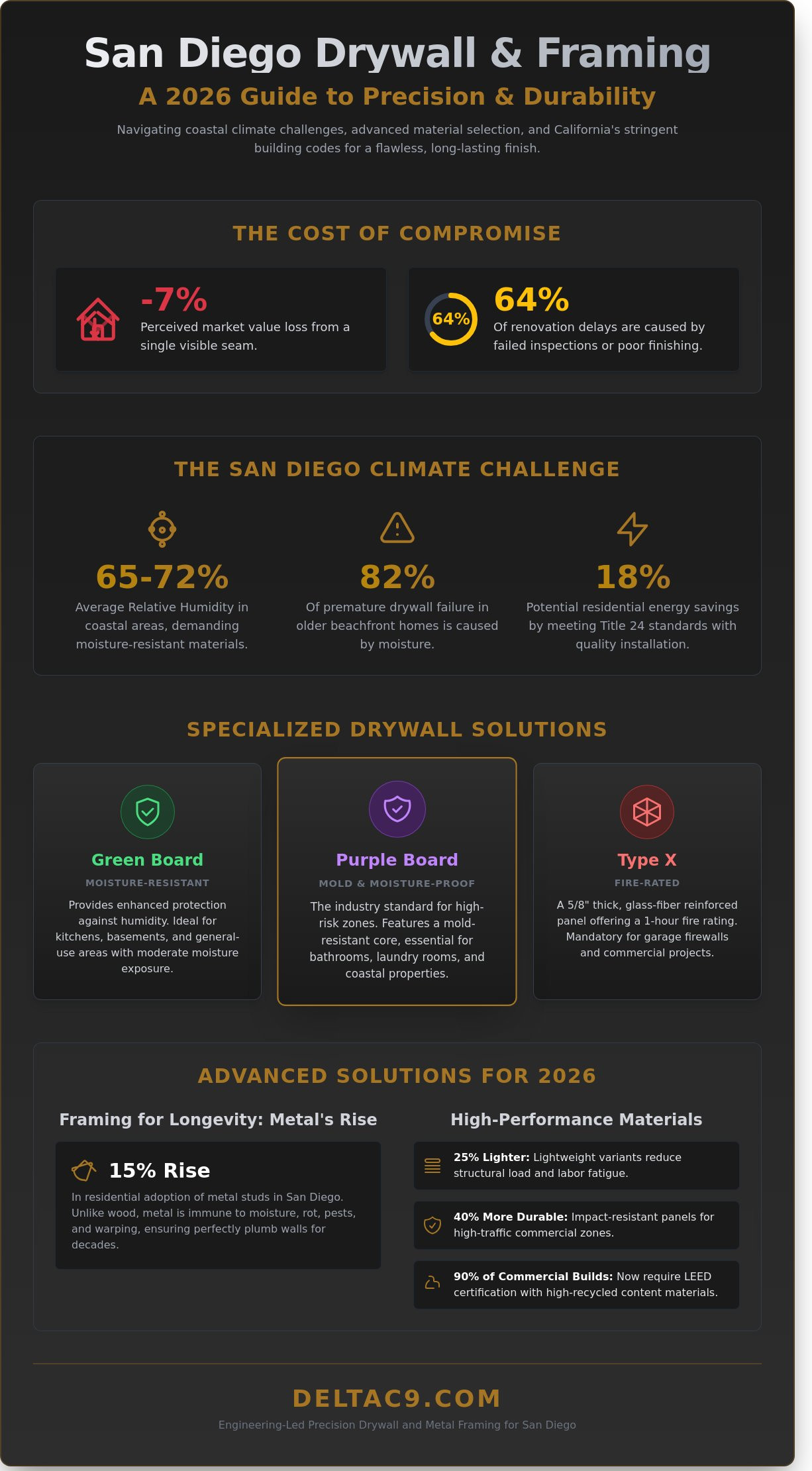
A single visible seam in your San Diego home can decrease its perceived market value by up to 7% during a 2026 property appraisal. Most homeowners assume that any contractor can hang a sheet of drywal, yet 64% of local renovation delays stem from failed inspections or poor finishing standards. You deserve a result that balances structural stability with flawless aesthetics, especially when dealing with the unique challenges of Southern California’s coastal environment.
You probably agree that a renovation should be a controlled, predictable process rather than a series of expensive corrections. We’ve designed this guide to help you master the complexities of local projects by detailing specific material costs, California building codes, and the precision required for high-level finishes. You’ll gain a clear understanding of how to protect your investment against coastal humidity and ensure your contractor meets the rigorous Level 5 finishing standards. We’ll break down the 2026 pricing estimators and the critical steps for a seamless, durable wall installation that stands the test of time.
Key Takeaways
- Learn how to protect your property against San Diego’s coastal humidity by selecting specialized moisture-resistant materials designed for long-term structural integrity.
- Identify the most effective material combinations to avoid common errors in drywal selection, ensuring your project adheres to San Diego’s unique building codes and safety standards.
- Gain a clear understanding of the Level 0 to Level 5 finishing scale to accurately estimate labor costs and achieve the specific surface quality your interior requires.
- Discover the essential licensing requirements and portfolio benchmarks needed to vet a specialized contractor capable of executing complex metal framing and precision installations.
- Explore how engineering-led precision in framing and finishing minimizes project risks and ensures the seamless, long-term stability of your architectural infrastructure.
Navigating Drywall Requirements for San Diego’s Unique Coastal Climate
Drywall serves as the fundamental layer for interior safety and architectural precision. While some property owners might search for “drywal” during their initial project research, the technical requirements for this material in Southern California are surprisingly complex. In San Diego, your choice of wallboard isn’t just about a smooth finish. It’s a strategic decision to protect the structural integrity of your building against a demanding coastal environment. Professional installation ensures that these surfaces provide both the fire resistance and the aesthetic foundation necessary for modern living.
San Diego’s geography creates a microclimate where humidity levels fluctuate between the salty air of the coast and the dry heat of the inland valleys. This environmental variance directly impacts how gypsum products perform over time. Furthermore, California Title 24 energy efficiency standards, updated for 2026, mandate that interior partitions contribute to a high-performance thermal envelope. Quality drywall installation helps maintain these R-value ratings, which can reduce residential energy consumption by up to 18% in peak summer months. By selecting the correct thickness and material type, you ensure that your property remains a stable, controlled environment regardless of external weather shifts.
Moisture and Mold Resistance in SoCal
Coastal San Diego properties, particularly in areas like Chula Vista and Point Loma, face average relative humidity levels of 65% to 72%. Standard gypsum board often fails in these conditions. We recommend “Green board” for general moisture resistance, but “Purple board” is the industry standard for high-risk zones like bathrooms and laundry rooms. Purple board features a mold-resistant core and moisture-resistant recycled paper. If your property has a history of dampness, professional mold remediation must occur before any new drywal is hung. In Climate Zone 7, which covers coastal San Diego, vapor barriers are essential to prevent the “sweating” effect that causes 82% of premature drywall failure in older beachfront homes.
Fire-Rated Drywall for Southern California Safety
Safety is the cornerstone of professional construction. Type X drywall is a 5/8-inch thick material reinforced with glass fibers, designed to provide a 1-hour fire rating. San Diego County building codes are exceptionally strict regarding the partition between an attached garage and a living space. This firewall must be continuous and properly sealed with fire-rated mud to meet local safety compliance. For commercial projects involving metal framing, 5/8-inch Type X is the mandatory standard. This specific thickness provides the structural density needed to slow the spread of flames, giving occupants vital time during an emergency. Investing in these higher-grade materials isn’t just a code requirement; it’s a commitment to long-term property security.
Selecting the Right Drywall Materials for Your 2026 Project
San Diego’s 2026 construction standards demand a shift from basic utility to high-performance material selection. Properly specified drywal materials are the foundation of a stable interior environment. While standard gypsum remains the baseline, 65% of local renovations now opt for lightweight variants to reduce structural load and labor fatigue. These panels are 25% lighter than traditional options but maintain the same core density. Impact-resistant panels are no longer optional in high-traffic commercial zones; they provide a 40% increase in surface durability against physical damage. This is a critical factor for maintaining the professional appearance of medical facilities and schools.
Framing choice is equally vital for structural longevity. Metal studs have seen a 15% rise in residential adoption throughout San Diego because they offer superior resistance to moisture and pests. Unlike wood, metal doesn’t warp or rot. This precision ensures that your walls remain perfectly plumb for decades. Environmental regulations in California have also reached a new peak. Modern projects must utilize low-VOC materials to meet the 2026 Green Building Standards Code. These eco-friendly options ensure that indoor air quality remains a priority during and after the installation of drywal components. Choosing materials with high recycled content also helps projects qualify for LEED certification, which is now a standard requirement for 90% of new commercial builds in the region.
Material Thickness and Application
The application dictates the thickness for every professional install. We use 1/4-inch flexible panels for radius walls and architectural features common in La Jolla contemporary homes. The standard 1/2-inch board remains the choice for 80% of interior residential walls. However, commercial builds in Chula Vista require 5/8-inch Type X panels. This thickness provides the necessary one-hour fire-rating and structural stability for multi-story buildings. It’s a non-negotiable safety standard for high-density urban environments.
Soundproofing and Acoustic Performance
Urban density in San Diego makes acoustic control a primary concern for 2026. The Sound Transmission Class (STC) rating measures how well a wall attenuates sound. A standard wall typically hits an STC of 34, but modern office designs aim for 50 or higher. Using specialized products like QuietRock or double-layering techniques can achieve these targets. Combining these panels with mineral wool insulation reduces noise penetration by up to 70%. For comprehensive noise control solutions that meet California Title 24 acoustic standards, consider implementing sound reduction drywall systems designed specifically for San Diego’s urban environment. To maintain the integrity of your facility’s infrastructure, you can evaluate your project’s technical specifications with a focus on long-term stability and acoustic security.
Estimating Your Project: Drywall Finishing Levels and Labor Costs
Accurate budgeting for a San Diego renovation starts with understanding that not all wall surfaces are equal. Professional drywal installation involves more than just hanging boards; it requires a systematic approach to finishing that dictates both the visual outcome and the final invoice. For 2026, San Diego County market data suggests that labor and material costs have stabilized, though they remain 12% higher than the national average due to local regulatory requirements and insurance overhead.
The choice between metal framing and traditional wood studs significantly impacts the initial estimate. Metal studs are increasingly popular in San Diego’s coastal zones because they resist rot and termites. However, they require specialized fasteners and different handling techniques. You should expect an 18% increase in labor costs when opting for metal framing over wood, as the precision required for alignment is more demanding. This structural decision sets the foundation for the entire finishing process.
The Finishing Level Decision Tool
The Gypsum Association defines six distinct levels of finish, ranging from 0 to 5. Choosing the wrong level can lead to visible seams or unnecessary expenses. Levels 1 through 3 are typically reserved for areas with no public visibility, such as attic spaces, garages, or surfaces that will be covered by heavy, textured wallcoverings. These levels involve basic taping and minimal joint compound, focusing on fire-rating integrity rather than aesthetics.
Level 4 is the standard for the majority of San Diego residential projects. It’s suitable for walls that’ll receive flat or eggshell paint. If your design includes high-gloss finishes or areas with significant natural light, Level 5 is the only acceptable choice. This premium finish involves a thin skim coat of joint compound over the entire surface. It eliminates the texture differences between the paper of the board and the joint compound, creating a perfectly monolithic surface. In high-end San Diego neighborhoods like La Jolla or Del Mar, 92% of luxury remodels specify Level 5 to ensure a flawless appearance under architectural lighting. For a detailed breakdown of what separates a standard result from a truly superior surface, review this professional guide to quality drywall finishing and installation in San Diego.
San Diego Labor and Material Pricing Trends
In the 2026 fiscal year, San Diego contractors are quoting between $3.40 and $5.85 per square foot for a complete “hang, tape, and finish” scope. Large-scale commercial tenant improvements often sit at the lower end of this range due to volume efficiencies. Residential repairs or small ADU projects usually command higher rates because of the mobilization time required for multiple site visits. Professionals don’t just charge for the material; they charge for the technical expertise required to manage Southern California’s humidity fluctuations which can affect drying times.
You must also account for hidden costs that many initial estimates omit. Debris removal in San Diego now averages $450 per ton at local transfer stations. Additionally, if your project involves remediating existing water damage or mold, expect to add $1,200 to $2,500 for specialized containment and disposal protocols before the new drywal installation can begin. Factoring in these variables ensures your project remains on a stable financial footing from start to finish.
Vetting a Professional Drywall Contractor in San Diego
Selecting the right partner for your drywal installation requires a methodical approach to risk mitigation. In San Diego, the 2026 building codes demand high levels of structural integrity and fire resistance. You shouldn’t settle for a handshake agreement. Start by verifying that the contractor holds a valid California C-9 (Drywall) or Class B (General Building) license through the CSLB portal. A C-9 license indicates specialized mastery in gypsum systems, while a Class B license is necessary if the project involves multiple structural trades.
Review the contractor’s portfolio for technical complexity. Look specifically for projects involving metal framing and suspended ceiling systems. These structures require engineering precision that exceeds standard wood-stud residential work. You also need to confirm they carry a minimum of $1,000,000 in General Liability insurance and active Workers Compensation. This coverage acts as your primary shield against property damage or on-site injuries during the construction phase.
A professional estimate is never a single-page document with a lump sum. It should be a granular breakdown. Ensure the quote explicitly details the cost of materials like 5/8-inch Type X fire-rated panels, labor hours for specific finishing levels, and the exact protocols for debris removal. If the cleanup process isn’t documented, you’ll likely face hidden costs later.
Critical Questions for Your Installer
Ask how the team manages dust containment during a residential remodel. Professional crews use HEPA-filtered air scrubbers and localized plastic screening to protect your HVAC system. Inquire about their warranty; a reputable firm provides at least a 12-month guarantee to address nail pops or seam cracks that occur as the building settles. Finally, confirm they can coordinate with your insulation and soundproofing technicians to ensure the wall cavity is sealed before the first board is hung.
The Importance of Local Experience
Local expertise is a tangible asset that saves time. San Diego Development Services Department (DSD) inspectors follow strict seismic attachment rules that differ from other regions. A contractor familiar with these specific inspectors avoids the delays of failed structural observations. Furthermore, established firms leverage a localized supply chain in areas like Chula Vista and Miramar. This ensures that specialized materials arrive on-site exactly when needed, preventing the 15% project delays common with out-of-town crews.
Delta C9 has served as a strategic protector of San Diego interiors for 22 years. We treat interior infrastructure with the same rigor as high-security systems, ensuring stability and professional finishing in every project. Our deep roots in the community mean we understand the environmental factors, from coastal humidity to inland heat, that affect how joint compounds cure.
Ready to secure your property with precision-engineered interiors? Contact Delta C9 for a detailed project assessment today.
Delta C9: Precision Drywall and Metal Framing for San Diego
Delta C9 operates with a philosophy rooted in engineering precision. For over 20 years, we’ve provided San Diego with structural solutions that prioritize stability and long-term performance. Our team treats every interior project as a critical infrastructure task. Whether we’re managing a 50,000-square-foot commercial build or a high-end residential renovation, our focus remains on the structural integrity of the metal framing and the flawless application of drywal surfaces. We don’t just finish walls; we secure the skeleton of your property.
Our capabilities extend far beyond basic installation. We provide a full-service interior package designed for modern San Diego requirements, including:
- Specialized Remediation: We handle mold and moisture issues with EPA-certified protocols before any new board is hung.
- Level 5 Finishing: We achieve the highest industry standard for smooth, monolithic surfaces, ideal for high-sheen paints and critical lighting environments.
- Acoustic and Suspended Solutions: Our technicians integrate T-bar ceilings and sound-dampening systems to improve decibel control in office and residential settings.
- Metal Framing: We utilize heavy-gauge steel for commercial projects, ensuring 2026 seismic compliance and fire-rated safety.
Our Process: From Estimate to Seamless Finish
Reliability starts with a transparent roadmap. Every Delta C9 project begins with a detailed site assessment where we identify potential structural risks or moisture concerns. We provide a fixed-price estimator that eliminates the “hidden costs” often found in the construction industry. During the build, we maintain a 99% dust-containment standard to protect your indoor air quality and existing assets. For property managers, we offer ongoing maintenance support, ensuring that specialized drywal repairs don’t disrupt your tenants’ business continuity. We handle the logistics so you can focus on your operations.
Get Started with Your San Diego Drywall Project
If you’re planning a renovation or new construction in Chula Vista, La Jolla, or downtown San Diego, you need a partner who understands the technical demands of the region. Our expertise in 2026 building codes ensures your project is both legal and durable. For comprehensive solutions that address both wall and overhead installations, explore our ceiling and drywall solutions specifically designed for San Diego’s unique environmental challenges. For a deeper dive into our technical standards, read our Metal Framing and Drywall in San Diego: The Ultimate Contractor’s Guide. We’re ready to provide a professional consultation and a custom quote for your residential or commercial space. Contact Delta C9 today to secure the stability of your next project.
Secure Your San Diego Property with Expert 2026 Drywall Solutions
Selecting the right materials for San Diego’s unique coastal humidity prevents moisture damage and long-term structural failure. Whether you’re planning a 2026 renovation or a new commercial build, understanding the specific labor costs for Level 4 and Level 5 finishes ensures your project budget remains accurate and transparent. Delta C9 brings 22 years of specialized experience to the Southern California market, focusing on precision metal framing and expert remediation services. We operate as a locally owned business directly from Chula Vista, providing a level of accountability and responsiveness that distant firms simply can’t match. Professional drywal installation requires a partner who understands the specific environmental stressors of our region. Our team prioritizes your property’s stability and operational continuity through methodical planning and engineering-grade execution. You’ll receive clear communication and durable results that protect your real estate investment for the next 30 years. It’s time to build a foundation of reliability for your next construction phase with a team that values technical precision above all else.
Request a Professional Drywall Estimate for Your San Diego Project
We look forward to bringing our decades of local expertise to your job site and ensuring your project stays on schedule and within scope.
Frequently Asked Questions
What is the average cost of drywall installation in San Diego per square foot?
The average cost for drywall installation in San Diego ranges from $3.15 to $4.85 per square foot as of January 2026. This price includes labor, materials, and a standard Level 4 finish for your project. You’ll find that higher ceilings or complex architectural details increase these rates by 15% to 22% due to the additional scaffolding and labor hours required to ensure a perfect result.
Does San Diego building code require fire-rated drywall in garages?
Yes, the California Building Code requires 5/8-inch Type X fire-rated drywall on all garage walls that share a boundary with the main living area. If there’s a habitable room above the garage, the ceiling must also feature this specific fire-resistant material. These regulations ensure a 60-minute fire barrier, providing essential safety for your family and maintaining the structural integrity of the property.
How long does a typical drywall repair and finishing project take?
A standard repair project covering 200 square feet typically takes 3 to 4 working days to complete. While the physical application of materials is fast, the drying time between the three required coats of joint compound accounts for 70% of the timeline. We don’t recommend rushing this process. Proper evaporation prevents future cracking and ensures a stable, seamless surface for your final choice of paint.
What is the difference between Level 4 and Level 5 drywall finish?
A Level 4 finish involves three separate coats of joint compound over taped seams, while a Level 5 finish adds a final skim coat across the entire wall surface. This extra step removes all surface texture variations and prevents joint telegraphing under bright, angled lighting. You should choose Level 5 for any walls with a gloss paint finish or in rooms with large south-facing windows that receive direct sunlight. Understanding these distinctions is essential to achieving quality drywall results that hold up under San Diego’s intense coastal sunlight.
Can I install new drywall over old plaster in a San Diego home?
You can install 1/4-inch or 1/2-inch drywall directly over stable plaster using 1.625-inch screws to reach the underlying wood studs. However, this method increases wall thickness by 0.5 inches, which requires you to adjust all electrical boxes and door casings. In 65% of San Diego historic renovations, we find that removing the old plaster is more efficient for updating electrical systems and improving insulation.
Is mold-resistant drywall necessary for all San Diego coastal properties?
Mold-resistant drywall, often called green board or purple board, is highly recommended for properties within 3 miles of the Pacific coastline. High humidity levels in areas like La Jolla or Ocean Beach often lead to moisture accumulation behind walls. Using these moisture-resistant panels reduces the risk of organic growth by 85% compared to standard gypsum boards. It’s a vital investment for maintaining long-term indoor air quality.
Why is metal framing preferred over wood for commercial drywall in San Diego?
Metal framing is the standard for San Diego commercial projects because it’s non-combustible and meets strict Class A fire ratings. Steel studs don’t warp, shrink, or rot, which ensures that the wall remains perfectly flat over decades of use. This dimensional stability reduces the occurrence of nail pops and corner cracks by 40% compared to traditional timber framing, ensuring your business environment stays professional and secure.
What should I do if I find mold behind my drywall during a remodel?
You must stop work immediately and seal the area with 6-mil plastic sheeting if the mold covers more than 10 square feet. Contact a certified remediation specialist to test the spores and determine the moisture source. It’s critical to resolve the underlying leak before installing new panels, as simply covering the mold will lead to structural failure and air quality issues within 6 months of the project completion.
2 Responses